
Sources for American Fork Previous Residents
A house-history search needs a time ladder. Current parcel data gives the starting point. Recorded land instruments move the chain backward. Directories and newspapers suggest who used the address in a year. Sanborn maps show what stood on the block. House files, cemetery entries, and family records can explain relationships. The table keeps those layers from being blended.
| Source | Years it covers | Where held | What it shows |
|---|---|---|---|
| Utah County Recorder | Official records 1870-present; uneven eras | County index, abstract, counter | Recorded parties and instruments |
| American Fork Citizen | 1906-2009 | Utah Digital Newspapers | Obituaries, notices, businesses, events |
| AFHS yearbooks | Listed years 1915-1973, with gaps | Library / FamilySearch | Student and group clues |
| Sanborn maps | 1890 six sheets; 1908 local sheet | LOC / Marriott | Building footprint and use |
| Historic-home files | Not numerically stated | American Fork library desk | Family sheets, funeral notices, surveys |
The verified record set does not include a complete American Fork city-directory publisher run. Ask the library or FamilySearch catalog about a specific year rather than turning an unverified lead into a coverage claim.
Start an American Fork House Chain
Choose one serial or complete address. Open the assessor property card and Parcel Map, then copy the current owner, situs, mailing address, taxing description, and parcel identifier. The sample county abstract shows owner, property address, mailing address, and rows for grantor, grantee, comments, entry, book, page, instrument kind, instrument date, recording date, consideration, satisfaction, and tie entry.
- Anchor the parcel with the Assessor or Parcel Map.
- Open Abstract or Property Information and separate the site from owner-mailing fields.
- Copy each possible conveyance with party role, instrument, entry or book/page, and both dates.
- Follow the prior party through the Recorder name index and check legal description or plat.
- Compare each dated owner clue with directories, newspapers, permits, maps, and family files.
Grantor means the party transferring an interest; grantee means the party receiving it. A chain of title is the linked sequence of recorded interests. A legal description identifies land by a recorded description, not only a street label. Stop or branch when a row is a mortgage, lien, plat, covenant, trust, estate, or association record rather than a conveyance.
Keep the Two Deed Dates
Instrument date and recording date are not interchangeable. The first can mark when a document was signed or made. The second marks when the county recorded it. A tax-year change, permit, directory appearance, and newspaper notice may use still other dates. Put each in its own column and cite the source.
The county Recorder's official records begin in 1870. The alphabetical index is handwritten through January 1978 and computerized from January 1978 forward. Abstract descriptions identify handwritten or typed material through September 1985 and computerized online material from May 1980. The overlap means a record may exist while a particular online path does not expose it. Older American Fork previous residents may require handwriting help, a counter visit, Archives guidance, or FamilySearch.
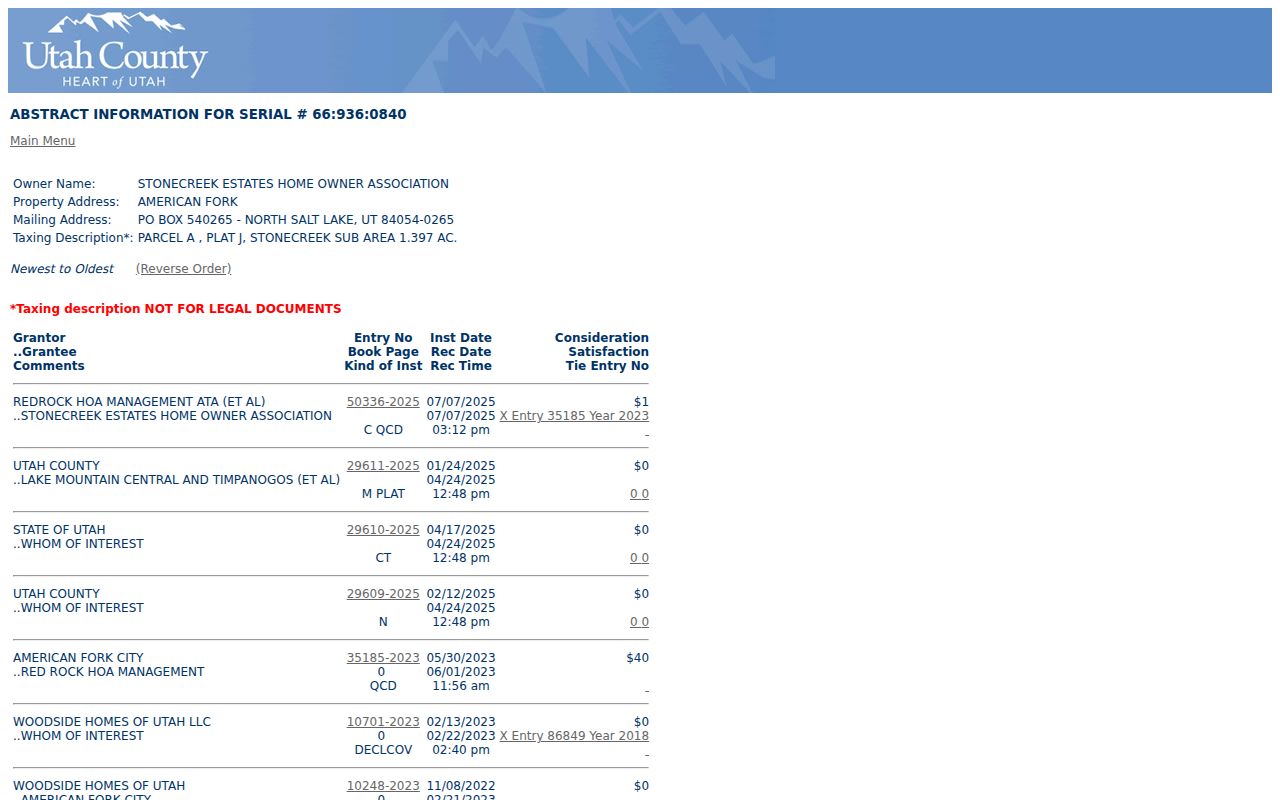
The county abstract image is linked to the inspected sample. Its association owner and outside-city mailing address show why a recorded party is not automatically a previous resident.
American Fork's Handwritten Era
Before the computerized index, a previous-residents search may depend on handwriting, book and page references, abstract descriptions, and legal land terms. Use the Recorder's party, address, land-location, document-entry, recording, image, and taxing-description forms where available. The county says online images are available without a stated image charge, with office copies available. It also says the office does not perform title searches or give legal advice.
The Utah State Archives land guide explains grantor and grantee indexes, entry books, and abstracts. A researcher can use the county for the local instrument, Archives for historical custody and method, and the library or FamilySearch for digitized genealogy material. Do not call an uninterrupted chain merely because two names match. Confirm parcel, legal description, instrument type, and date.
Sanborn and House Files in American Fork
Physical evidence can outlast a household clue. The Library of Congress holds six American Fork Sanborn sheets from 1890. Marriott holds a digitized 1908 local sheet. These maps show building footprints, materials, uses, and streets, but they do not name ordinary residents. Compare them with a directory address, newspaper notice, permit, or family file to test whether a building fits the address at that time.
American Fork's library historic-home files include family-group sheets, funeral announcements, building surveys, and histories of houses that have been demolished. That makes the reference desk a strong route for previous residents when the structure has changed. Ask with the address, former owner, family, street, and approximate year. There is no published complete house-file inventory.
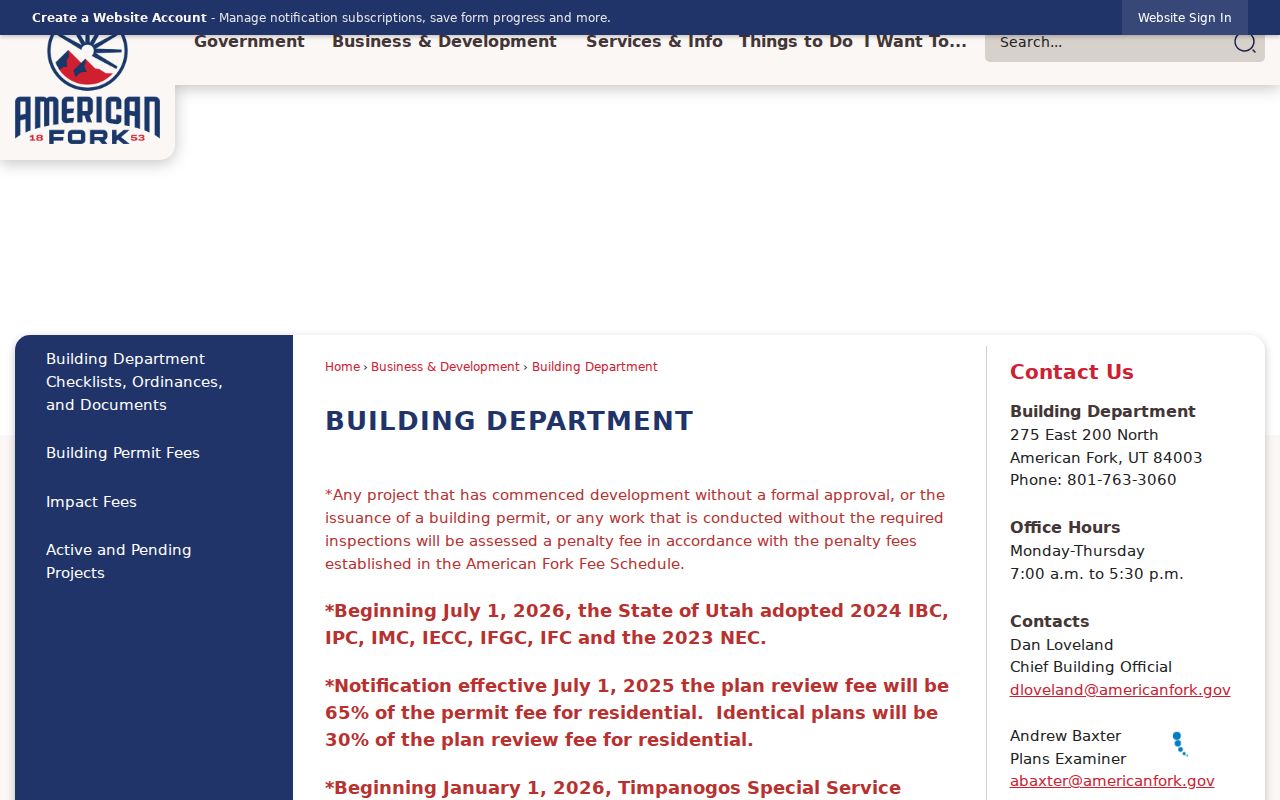
The historic-homes source explains the library's family and building files. A reference request may reveal a house story that no current portal indexes.
Search the Citizen for Past Households
American Fork Citizen issues from 1906 through 2009 can supply date-specific clues between deed entries. Search surnames, streets, businesses, funeral notices, marriages, public events, and addresses. Save issue date and page, then open the image because OCR can miss names. An obituary may name relationships and a residence. An advertisement may name a business at the site. Neither one is a deed.
AFHS yearbooks provide a different household clue. The listed years include 1915-17, 1920-21, 1926-28, 1930-31, 1936, 1938, 1940-41, 1943-48, 1950, and 1952-73. A yearbook can place a student in a school context, but it is not a complete city resident list. Cemetery interments, Names in Stone, and the library's family sheets can help close a life-history trail.
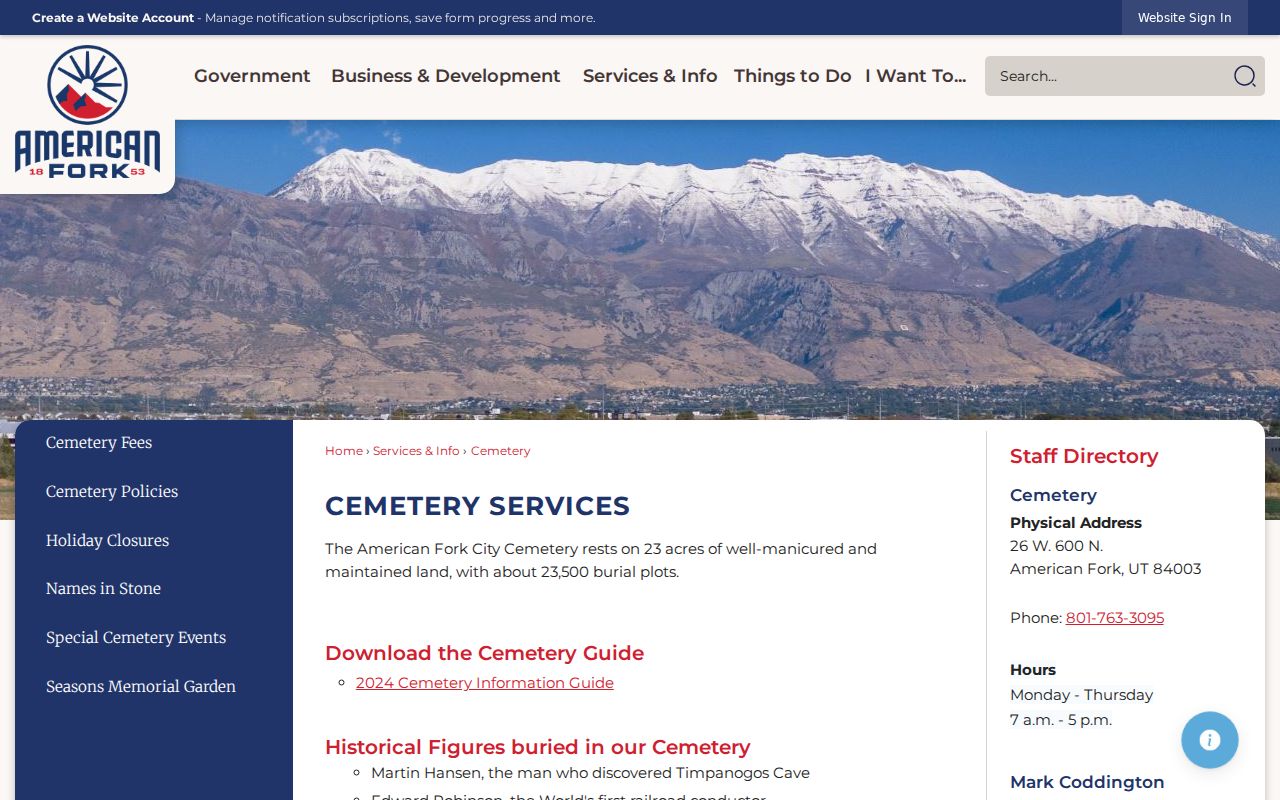
American Fork Cemetery reports 23 acres and about 23,500 plots, with a 1,580-foot WPA wall built in 1937-38. Its interment map is a clue to compare with an obituary, vital record, or house file.
Pair Directories With Census Years
Directory years and census years fill different gaps. A directory may appear every year that a publisher worked, while a census offers a periodic household snapshot. When a name appears in one volume and not the next, test a move, death, omission, publication gap, spelling change, or different household contact. Keep the address and name as they were printed before modernizing them.
- Record the first directory year, name spelling, address, occupation, and household marks.
- Check the next available volume and note changes, not just matches.
- Use the street or reverse section if the volume provides one.
- Pair each period with census, newspaper, cemetery, or family-file evidence.
- Compare the result with the Recorder's legal description and parcel sequence.
The historical shelf belongs with the American Fork city directory collections. Current address-keyed work belongs with the street directory. Previous residents are the bridge between them, following one address backward through time.
American Fork Place-Name Variants
Older records may not use the modern city name. The area was settled in summer 1850, incorporated as Lake City on June 4, 1853, and changed back to American Fork in 1860 to avoid mail confusion with Salt Lake City. McArthursville also appears in the state history. Try these variants in a historical source when the collection supports full-text searching, then confirm county and place context.
Do not invent a street-renumbering date. The verified address grid uses Main and Center as axes, while a historical street name, city label, parcel line, and postal ZIP can each follow a different clock. Use plats, planning files, Sanborn maps, deeds, and directory street sections to explain a change.
Build a Dated American Fork Timeline
| Evidence | Date to save | What it contributes |
|---|---|---|
| Recorder deed or abstract | Instrument and recording dates | Recorded interest and legal description |
| Assessor / GIS | Assessment or map source date | Current parcel and mailing/site fields |
| Permit or planning file | Project, inspection, or meeting date | Construction or civic address clue |
| Directory / newspaper | Issue or volume year | Historical name and place snapshot |
| Sanborn / cemetery / house file | Map, interment, or file date | Physical or family context |
The city-name changes, 1870 Recorder start, 1890 and 1908 map snapshots, 1906-2009 newspaper run, and listed yearbook years create a useful American Fork research spine. It is not a promise that every year or resident is recoverable online. When the chain reaches a gap, contact the custodian, library reference desk, Archives, or FamilySearch and mark the gap instead of filling it with an assumption.