
Current American Fork Resident Sources
Current sources describe different slices of American Fork life. The assessor and GIS identify assessed parcels. The Recorder identifies parties to land instruments. Elections supplies a request-based civic file. City pages name public officials or participants, while the HOA registry describes associations. Read the label in every result before using it.
| Source | What it lists | Keeper | Access |
|---|---|---|---|
| Property and parcel records | Assessed owner, situs, serial, map fields | Utah County Assessor / GIS | Online reference |
| Recorder index | Grantors, grantees, instruments, dates | Utah County Recorder | Index, images, copies |
| Voter file | Permitted voter and civic fields | Utah County Elections | Request, fee, affirmations |
| City records | Agendas, minutes, ordinances, agreements | American Fork City | Online or GRAMA |
| Association registry | Legal HOA name and registration number | Utah Commerce | Online search |
The best source depends on the question. Use the American Fork resident lookup workflow when a name needs checks across more than one record role.
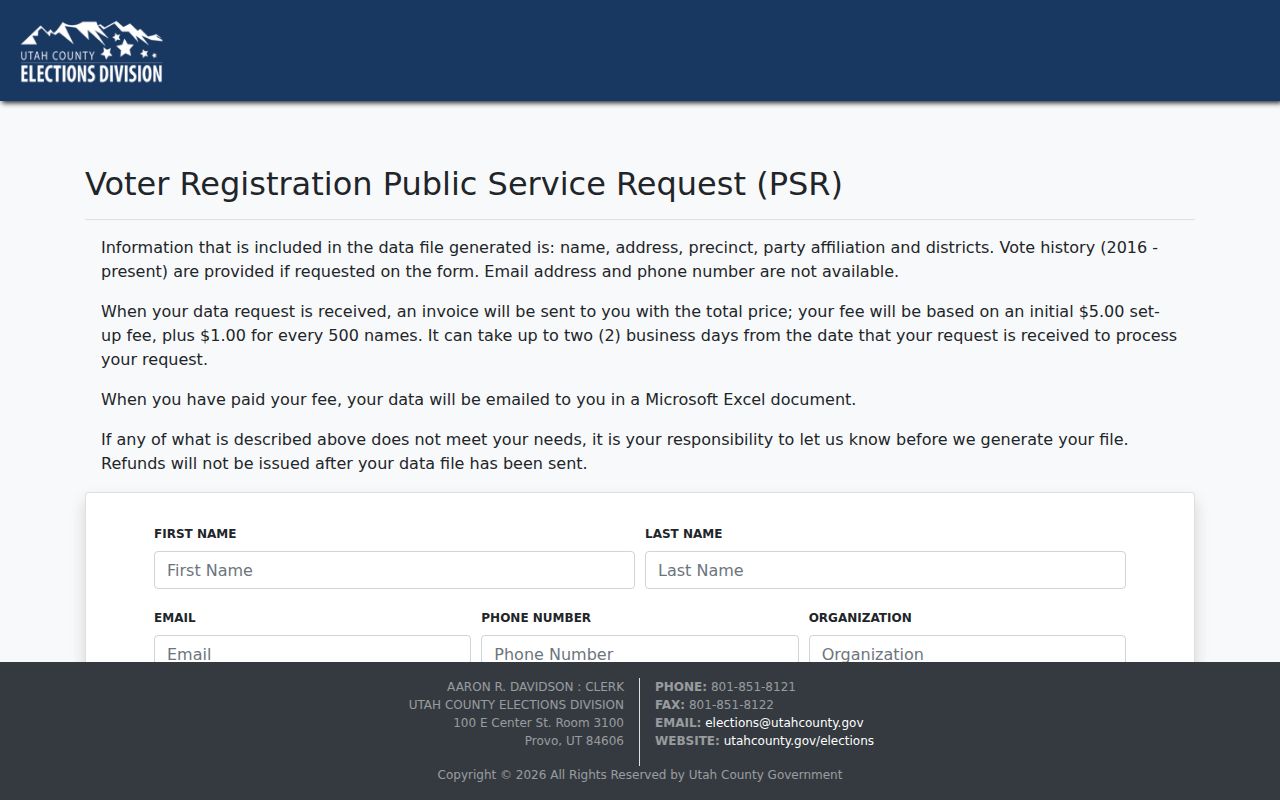
The voter-file image is linked to the county request route and shows why civic records have purpose and access controls.
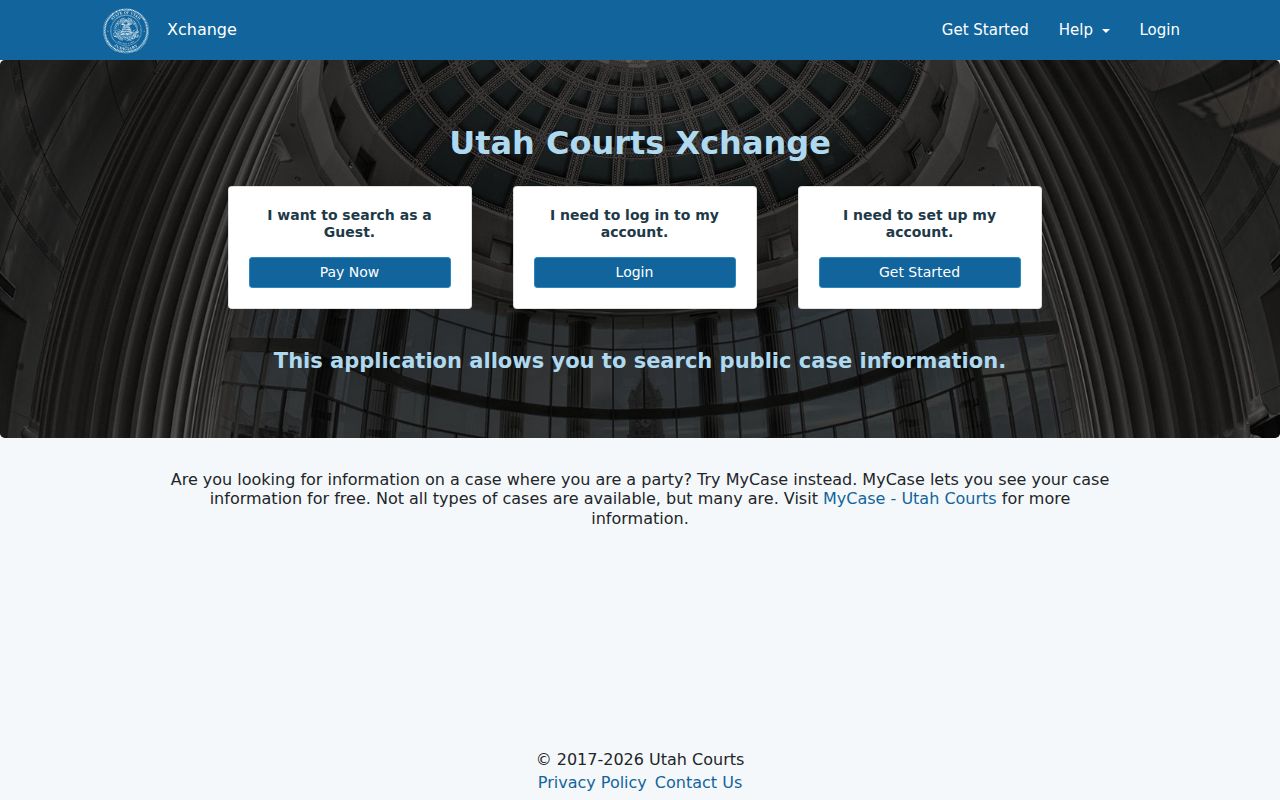
The court-search image is linked to Xchange and reinforces the need to check court, date, role, and public status.
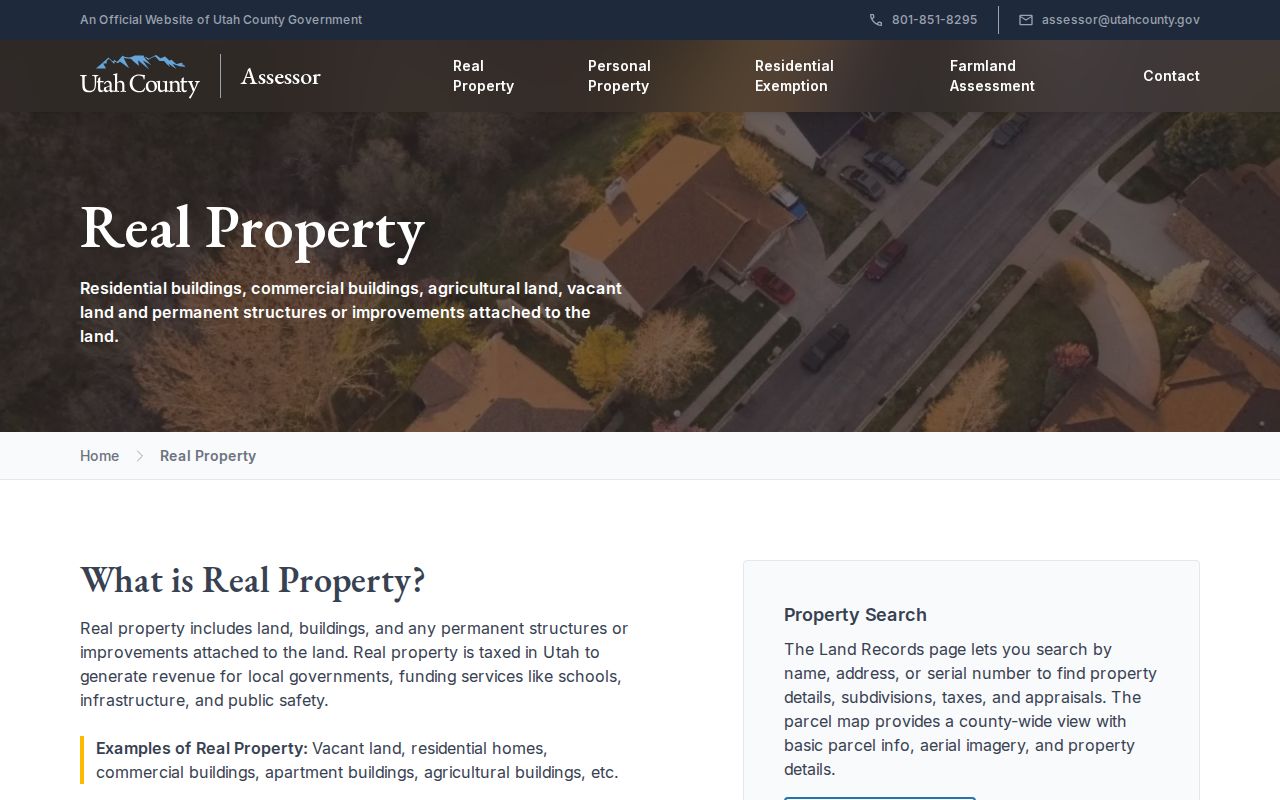
The assessor image is linked to the property portal and gives the address-first workflow a concrete starting point.
Finding American Fork Residents
A useful search begins with a question, not a pile of names. If the question is who is assessed at a parcel, use the Utah County Assessor or Parcel Map. If it is who signed a land instrument, move to the Recorder's index and abstract. A court party belongs in Xchange, while a historical classmate may turn up in an AFHS yearbook or an American Fork Citizen issue. Each result needs a date, a place, and a record role before it can support a resident claim.
Start with the least ambiguous detail in hand: a full name with a middle initial, a street number, a serial, an approximate year, or a known family connection. A current parcel may name an entity, trust, estate, or association. A directory may show a head of household or telephone subscriber. A paper can show a person who attended a meeting without showing current residence.
- Normalize the address or name, including direction, street type, unit, and time period.
- Check the assessor and parcel map, saving the parcel serial and separating situs from mailing data.
- Read the recorder abstract for parties, instrument type, dates, and entry or book/page clues.
- Use Xchange, Elections, vital-record, or local-history channels that fit the question.
- Compare independent sources and ask the custodian for a record that is not posted online.
American Fork Records Offices
Most county records for American Fork are kept in Provo, the Utah County seat. The Utah County Recorder is at 100 E Center St, Suite 1300, Provo, and can be reached at 801-851-8179 or recorder@utahcounty.gov. The Utah County Assessor is at 100 East Center St, Suite 1100, with 801-851-8295 and assessor@utahcounty.gov. American Fork City Hall at 51 E Main Street is the local route for city records and GRAMA questions.
Utah County Recorder
100 E Center St, Suite 1300
Provo, UT 84606
801-851-8179
The county GIS office, Treasurer, Clerk, and court terminals add more routes. American Fork City Recorder records ordinances, resolutions, agreements, agendas, and minutes. None is a master residents list, so the office should be chosen by record type.
American Fork Parcel Facts and Occupancy
The assessor search accepts a name, address, or serial and links into parcel details. The Parcel Map can search by address, owner name, city, or several serial formats. Its layers include parcels, historic parcels, aerial photos, deed points, tax districts, and city boundaries. Those layers make a strong starting point for an American Fork address, but they remain reference tools.
Utah County GIS metadata makes a key distinction visible. SITE_FULL_ADDRESS, SITE_STREET_NAME, SITE_UNIT, and SITE_ZIP5 describe the parcel's situs. OWN_FULL_ADDRESS, OWN_CITY, and OWN_ZIP5 describe the owner's mailing destination. In the county's sample abstract, a community association has an American Fork situs and a North Salt Lake PO Box. An assessed owner or mailing address is not proof of physical presence.
- Parcel
- A mapped tax unit identified by a serial or parcel number.
- Situs
- The physical site address tied to the parcel.
- Roll
- A government list used for a defined purpose, such as assessment or elections.
- Index
- A finding aid that points to a record; it is not always the record image itself.
Search the American Fork Deed Index
The Recorder says Utah County official records begin in 1870. The alphabetical index is handwritten from 1870 through January 1978, then computerized from January 1978 forward. Abstract coverage also overlaps: handwritten or typed material runs from 1870 through September 1985, while computerized online material begins in May 1980. Those are technology and access milestones, not a claim that every old page is equally searchable.
Use the Recorder's find-records explanation for party, land-location, and document-type paths. Online images are described as no-charge, while office copies remain available. The Recorder warns that it does not perform title searches, telephone research, or legal interpretation. For an older American Fork name, expect handwriting, legal-description work, a counter visit, or a library and Archives fallback.
| Name form | Last, first, middle, or the party format shown by the county form. |
|---|---|
| Address form | Number, direction, street, street type, and city/location. |
| Record scope | All Records or Current Records Only where the form offers it. |
| Document route | Entry number and year, or book and page. |
Verify an American Fork Court Name
Utah Courts Xchange is the public statewide route for district and justice court indexes. Its controls include jurisdiction, all cases or judgments, last name or company, first name, case type, search scope, birth date when shown, citation number, and a date-range panel. Wildcards can help with a surname or first-name variation. Search results can reach 500, so county, court, case type, or dates may need to narrow the set.
American Fork District Court closed December 31, 2024 and moved to Provo District Court. The court directory still identifies an American Fork kiosk at 75 E 80 N #202 and a North Utah County Juvenile Court location at Suite 201. A case location that says Provo is therefore not automatically a mismatch. Check the filing date, party role, case type, and public case history. Sealed, expunged, juvenile, child-welfare, and other restricted records may not appear.
Utah Voter Rules for American Fork
Utah County Elections provides a public-service request rather than a free street-to-name screen. The form asks for the requester's name, contact details, purpose, city, precinct, district, party, and vote-history choices. It states a $5 setup fee plus $1 per 500 names, delivery up to two business days, and an Excel email delivery route. The form also includes private-data, qualified-requester, nondisclosure, and false-statement acknowledgments.
The county describes name, address, and age range as public while DOB, driver or state ID, SSN, email, and phone are protected. A May 25, 2026 SB153 change altered which voter fields are public, while at-risk protections remain. County pages have conflicting vote-history coverage dates, so check the live form before relying on a year range. A voter row is not proof that a person occupies a parcel.
| Request choice | What it can add | Limit |
|---|---|---|
| Residence city | American Fork city slice | Not a parcel roster |
| Precinct or district | Civic geography | Can span many blocks |
| Vote history | Election participation fields | Protected records omitted |
American Fork Vital-Record Clocks
Vital records need an eligibility check before they become useful in a resident search. Under Utah Code 26B-8-125, birth records become public after 100 years, death records after 50 years, and other vital records after 75 years. Earlier certified copies generally require a direct tangible and legitimate interest or another route in the statute. The Utah Office of Vital Records and Statistics is the statewide issuing office; local health-district channels can issue some records in person.
The marriage and divorce request form asks for the record choice, both spouse names, place and date, applicant relationship, contact and delivery details, number of copies, ID, signature, and fee. The researched fee schedule lists initial certified-copy amounts of $22 for birth, $30 for death, and $18 for marriage or divorce, but fees can change. The mutual-consent adoption registry is limited to an adult adoptee, birth parent, or blood-related sibling. It is a family-reconnection route, not a general name list.
American Fork's Local-History Stack
The American Fork local-history page gathers several useful clues. American Fork Citizen issues run from 1906 through 2009 in the Utah Digital Newspapers route. AFHS yearbooks are listed for 1915-17, 1920-21, 1926-28, 1930-31, 1936, 1938, 1940-41, 1943-48, 1950, and 1952-73. The gaps matter. They are not evidence that every missing year exists nowhere, nor that the surviving volumes list every city resident.
The library's historic-home files include family group sheets, funeral announcements, and building surveys, even for some homes that were demolished. Oral histories gathered by David Rawson Eagle in June 2015 add family, street, business, and event leads. The cemetery's Names in Stone route adds interment and map clues. Use each lead with a date and then corroborate it with a deed, newspaper, vital record, or other primary source.
The Marriott Digital Library's Utah City Directories collection describes resident, street, business, organization, and institution entries arranged by name, geography, or publisher. The inspected 1900 view showed Ogden and Salt Lake examples, not a confirmed continuous American Fork run. Treat the collection as a place to test, not as proof of a local year series.
Two Sanborn snapshots add physical context. The Library of Congress holds a six-sheet American Fork set from 1890, and Marriott has a digitized 1908 local sheet. They show building footprint and use, not ordinary household names.
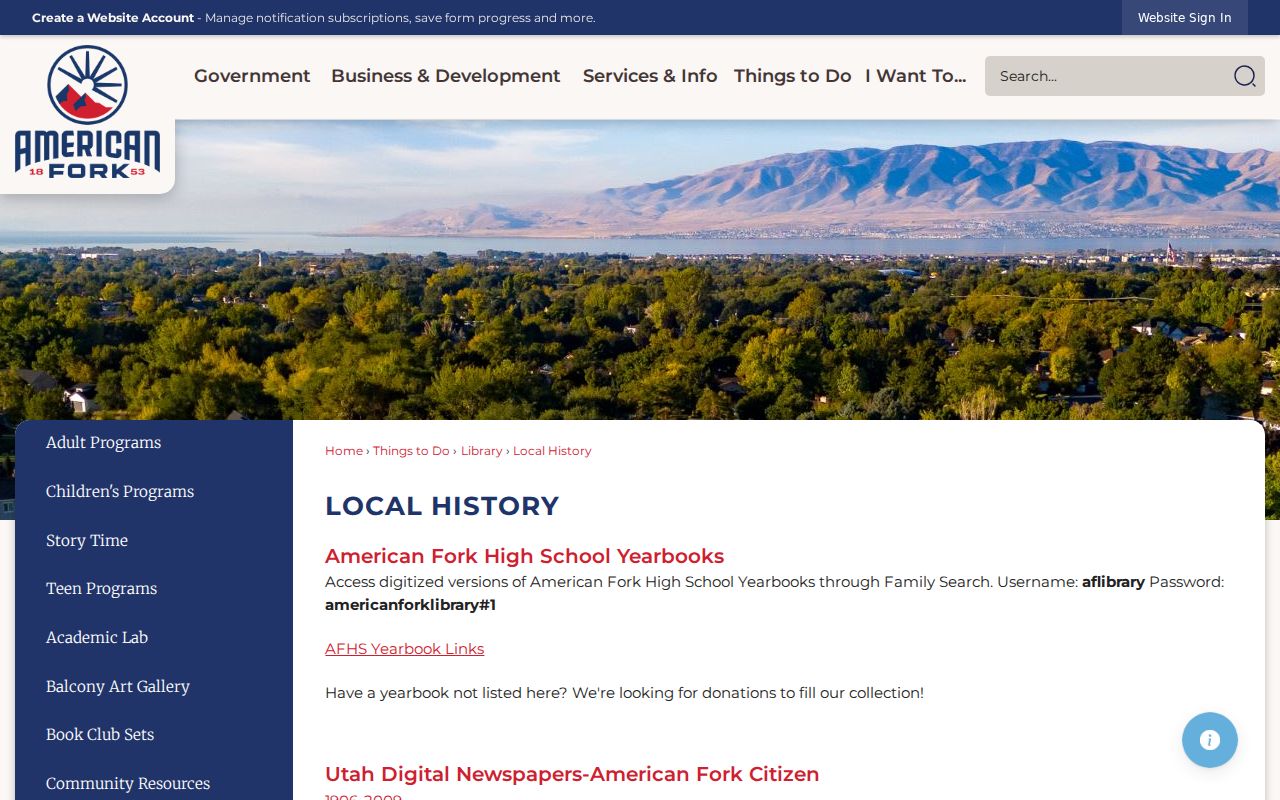
The city local-history landing page is the source for this research stack. Its mix of newspapers, yearbooks, oral histories, and digital links is more useful when a modern index has no answer.
When American Fork Records Need GRAMA
Utah's Government Records Access and Management Act, or GRAMA, is the fallback for an existing public record that is not posted. A written request should give the requester's name and contact route, identify the department, and describe the person, address, record type, and date range with reasonable specificity. An agency does not have to create a new record, answer a question, or compile data it does not maintain.
Inspection is generally free under the cited rules, while copies, media, staff time, or processing can carry actual costs. The first quarter-hour of staff time is free in the researched fee provision. American Fork's city form asks whether the requester wants inspection or copies and provides cost-cap, fee-waiver, expedited, and signature fields. County or city denials and redactions have appeal routes described by the Utah Archives FAQ.
American Fork Safety and Status Channels
Utah County Jail offers name and arrested-date searches, plus a current-inmates route. The name search covers the last two years and booking information can be delayed 24 hours. Utah DOC covers current incarcerated, probation, or parole status by name or UDC ID. VINE provides anonymous safety notifications, and BCI maintains offender registries and a self-access criminal-history route. A booking is not an adjudication, a registry entry may be self-reported, and a status can change.
Privacy protections shape every source. Utah Safe at Home gives eligible survivors a substitute address and mail forwarding. At-risk voter status, sealed court files, closed vital records, juvenile records, and protected law-enforcement details can remove data from a search. Keep those limits in the search record. Do not combine unrelated clues to target a person.
American Fork Records Through Time
Place names can change the result set. The area was settled in summer 1850, incorporated as Lake City on June 4, 1853, and changed back to American Fork in 1860 to avoid mail confusion with Salt Lake City. McArthursville also appears in the state history account. Historical searches should test those variants and then confirm county and place context.
| Era | Useful route | Search note |
|---|---|---|
| 1850-1869 | Archives, church and family records, early histories | Try place-name variants |
| 1870-1977 | Handwritten Recorder index and historical collections | Expect handwriting or counter help |
| 1906-2009 | American Fork Citizen | Check OCR against the page image |
| 1978-present | Computerized county and city portals | Check status and privacy rules |
Recent access changes deserve a date stamp. The Utah HOA registry launched a new search in September 2025. The Timpanogos Library Consortium was reported in June 2025. SB153 changed voter-record treatment in May 2026. A portal can improve or change after the research date, so verify fees, fields, and availability with the named custodian.
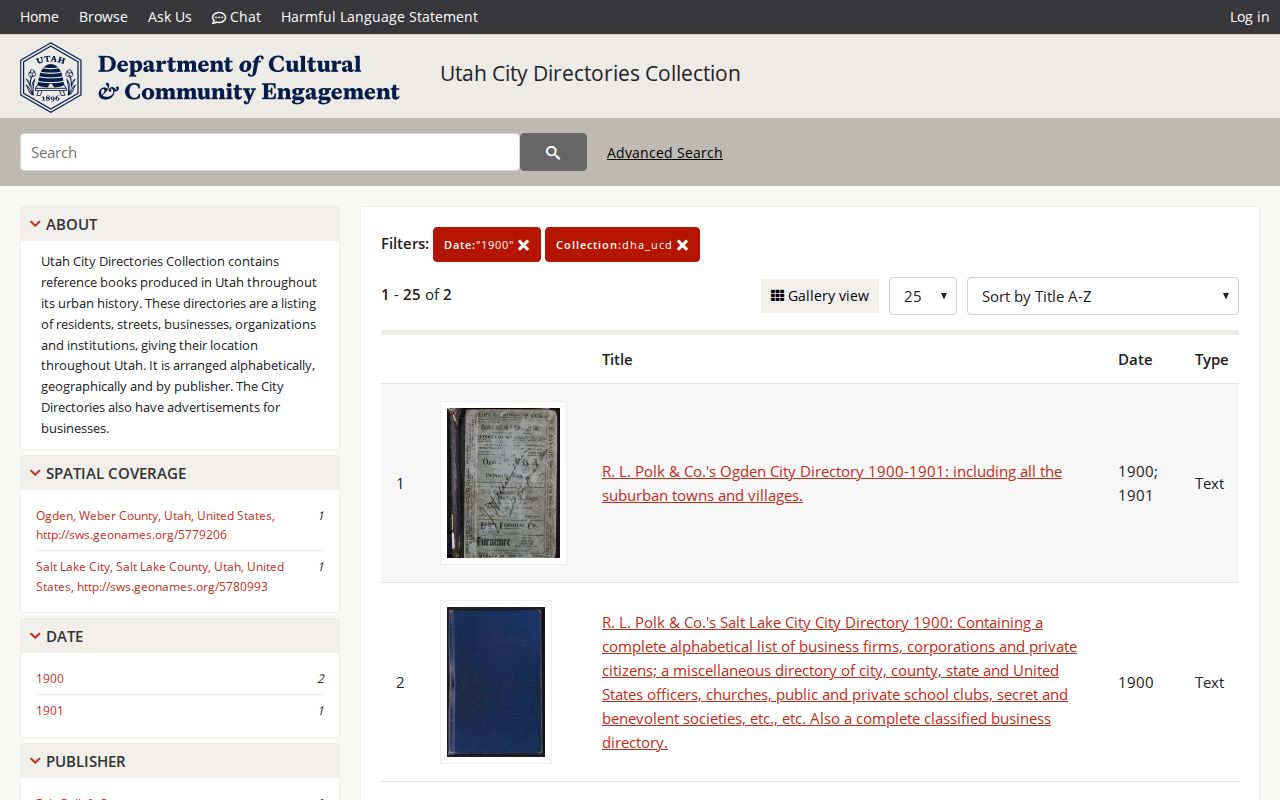
The Marriott Digital Library collection search demonstrates the broader directory shelf. It should be paired with local library and FamilySearch catalog help when an American Fork volume is not visible online.